Wednesday, October 26, 2011

Ernie Pyle: Classic reporting


Lately, I’ve been revisiting one of my favorite authors Ernie Pyle. While Pyle is most notably remembered as the great WWII correspondent I’ve been recently reading the work of his pre-war roving reporting days.

The articles have widely varying subjects as Pyle traveled the expanses of the North American continent searching out what most interested him.  Through his writing he always manages to make those points that interest him a deep interest of mine.    

Pyle couldn’t have written these articles at any other time.  It’s the time of the Greatest Generation; much of what characterizes America was witnessed and discovered by Pyle on his roaming of America.  He visited and conversed with Gold Rush prospectors in the Yukon, visited the Leaper colony in Hawaii, witnessed the Dust Bowl of the Great Depression, saw the Mid West eaten barren by locusts, interviewed George Washington Carver, and much more. 

But of all these places and their circumstances I always get the sense that what interested Pyle the most was the people. I love his descriptions of people: their appearance, the way they move, the way they talk, and what they say. 

There’s the particularly jolly priest he met at the leaper colony: “When he talked he talked all over; it took a least six square feet for Father Peter to talk in. He jumped, struck attitudes, and laughed loudly and frequently.”

There’s also Josie Pearl a prospector in Nevada who made and lost multiple fortunes hunting for silver and gold: “Her dress was calico, with an apron over it; on her head was a farmer’s straw hat, on her feet a mismatched pair of men’s boots, and on her left hand and wrist—$6,000 worth of diamonds…She was what I like to think of as the Old West—one day worth $100,000 dollars, the next day flat broke, cooking in a mining camp at $30 a month.”

Pyle writes of the America and the Americans of another time.

Below is a previously written post dealing with Pyle’s contributions as a war correspondent during WWII.

Ernie Pyle: "War makes strange giant creatures out of us little routine men who inhabit the Earth."

Ernie Pyle (center, passing cigarettes) with infantry men.

I wanted to share a bit about a ‘hero’ of mine (for lack of better words).  I am a student of journalism and love the work and character of Ernie Pyle.  Ernie Pyle was a journalist most influential in his coverage of the front lines of World War II. 
            Pyle started as a roving reporter traveling and writing to his readers sharing his experiences abroad.  Pyle was also an aviation reporter in the early days of flight.
            The reason Pyle was so loved by his readers was the personal approach he took in his reporting and interviewing.  He was soft spoken and a great listener and his interviewees very easily opened up to him.  In his personal style of writing he set his readers in the same place and experience he was witnessing himself.  His vivid, intimate reporting style found its highest purpose in war corresponding. 
            With the war taking place overseas many families were sending their sons, brothers and husbands to far away places and wanted to feel connected to them.  Pyle provided that connection. 
            Pyle’s reporting was more intimate and more focused on the daily lives of the troops than it was on the victories, movements and generals.  He would often comment on the strangeness of war.  Those back in the U.S. needed that connection to there loved ones.
            While reporting on the war Pyle lived and traveled with the troops on the front lines.  Pyle and the troops developed a affectionate relationship for each other.
            Reporting on the front lines has its risks and after doing tours in Italy, Africa and all over Europe Pyle went on to report on the war in the Pacific and was killed by a Japanese machine gun bullet that went through his helmet.  At his death Pyle was so loved by the American public that it is felt by many that his death overshadowed the death of President Roosevelt just six days before.
            You must read his work.  Here are some samples:


Thursday, September 15, 2011

the classic and stylish station wagon


I feel station wagons have fallen decidedly out of fashion in past five to ten years. Station wagons seem to get shunned by society. They are turned away as drab, unexciting implements that have long been obsolete. They were first replaced by minivans, then sport utility vehicles and more recently crossovers.  For the new models that closely resemble the classic station wagon the automakers create new terminology, such as sport utility and crossover, anything so long as they evade the stigma of the station wagon.

It seems the station wagon is the relic of another time; maybe a better time.  It’s a shame station wagons are not more fully embraced today, because in their hay day they were truly something special and important to the American family, and yes, even exciting.  Since they were largely a product of the ‘50s and ‘60s, the glory days of the American automobile, they were highly stylish.
1950 Buick Estate Woody
1967 Pontiac
It was a time when bigger was clearly better--making low, wide and long the current vogue in auto design. The station wagon was in excellent taste. Its three rows a seating and cargo space gave purpose to the long sweeping lines so in style.   As kid, my grandpa still drove an old station wagon and that last bench facing rearward was always the best part of riding with him.

1957 Oldsmobile 88 wagon
1960 Buick LeSabre Estate Wagon

Another ‘50s element that added to the beauty of American station wagons was the unrestricted, open-air feel that was so important to create a pleasant driving experience for car owns.  This meant big wraparound windows, razor thin pillars, deleted pillars (hardtops) and vista windows in the roof all used to create an open glasshouse canopy.  American families wanted to be able to pile into the family car for a road trip and have a great view of all they passed.  Families were crisscrossing the nation in rolling works of art.

Then in the ‘60s it was a time of unrestricted high performance.  Cars were offered with huge lists of engine options running from the mundane economy engines to the probably-shouldn’t-be-street-legal, don’t-tell-my-insurance-agent engines.  So, there were the high performance station wagons.  Chevy Nomads (extra-stylish two-door station wagons) were given the now legendary Chevy small-block V-8.

1957 Chevy Nomad
The Oldsmobile 4-4-2 station wagon was probably the greatest and most outrageous of the high performance wagons. It was offered with the vista roof and the Hurst hi-po package which included: 455 cubic inch big-block V8, fiberglass ram air hood, heavy duty suspension, disc brakes, duel mode tailgate (swings down and swings sideways) and power everything.

Wednesday, September 14, 2011

The Burns and Allen Show

"If I say the right thing, please excuse me." Gracie Allen
Being a fan of old things I love classic television, and one of my favorites is The George Burns and Gracie Allen Show starring the greatest husband and wife comedy team. Burns played straight man to Allen’s dizzy dame. They started in vaudeville, became hits; moved to radio, became hits there; and then moved to television to become hits all over again.

George playing straight to Grace's "illogical logic."

The Burns and Allen Show has lots of appeal for modern television audiences. It was quite advanced for its day and it remains freshly unique from modern television trends. George’s character had the power to walk through the fourth wall to directly converse with and comment to the “live” audience. For fans of The Office this will feel similar to Jim Halpert’s sly smirks and stares, but it works out very differently.

In the Burns and Allen Show it allows George to step out of scene to monologue (with impeccable timing famously punctuated by his cigar) and occasionally manipulate plot towards a more entertaining ends.

The show’s unique stage set aids George’s comical flaunting of the fourth wall. It consists of two homes with partially-built walls (including front doors) facing the audience—unlike other shows which have no fourth wall and the ends of the joining walls are hidden to disguise the wall’s absence. George could walk through the walls to eavesdrop on Gracie’s scheming, keeping him ahead of his co-characters’ actions (although not always).

Gracie brings home a trimmed Christmas tree

But the most drawing feature of the Burns and Allen Show is Gracie’s lovably confused character with her loopy conversations and silly schemes. George Burns once described her character as “the American poster child of confusion and misunderstanding.” The real genius of the character is that, for Gracie, it is never really Gracie who is confused but those around her, and it is up to her to patiently set them straight. To do that she uses her unique brand of “illogical logic”--the things she says always have the strictest appearance of being logical.
"I was so surprised at being born that I didn't speak for a year and a half." Gracie Allen
Gracie’s character is very charming, loving and sweet. Her mix-ups frequently involve her earnest attempts to help her friends, and nearly everyone is a friend. Unlike Lucy Ricardo in I Love Lucy, Gracie is rarely driven by selfish and self-serving motives.

Those closest to her learn to wade through the misunderstandings and George encourages it (after all, this is how he makes his living as a comedian). Strangers become confused beyond natural sense often leaving their hats while fleeing Gracie’s presence. She then thoughtfully stores the forgotten hats after labeling them with names and personal descriptions (one of my favorite running gags of the show). George keeps a bottle of aspirin on the coffee table, for guests. When someone attempts to ask George why he stays with such a … he cuts them short, answering: “I happen to love her, that’s why.”

The show’s a blast of old-time charm, spiraling dialogue, innovative formatting, clever narration, and ambiguous boundaries that could only be made in the earliest days of television. In those early days television was new and the rules were not yet made.

Much like in early film and Orson Welles’ Citizen Kane, when rules and trends are unmade or unknown it allows creative talent to use fresh ideas and styles that are independent from the influence of previous trends and practices.  The result is an exciting and lasting originality.

A few samples:
Gracie's Checking Account- This is a very funny episode early in the series. It runs 30 minutes.
Lamb Chops- This is an eight minute film of one of their vaudeville routines. 


*Orson Welles had complete creative control and a very limited understanding of film-making when he made Citizen Kane, his first film. He had a strong theater and radio background.

Wednesday, August 10, 2011

Colt 1911 100th Anniversary

Colt M1911 as made today 100 years later

This year marks the 100th anniversary of the Colt M1911 semi-automatic pistol which famously and reliably served American armed forces for so many decades. Not being a collector or shooter myself, I am familiar with the 1911 from war films, documentaries and the history books. It served and defended America and its soldiers in World War I, World War II, the Korean War, the Vietnam War, the Gulf War and the War in Iraq.

M1911 in combat during WWII

Intentionally designed, by John Moses Browning, as a military side arm it was first adopted by the United States Army as the standard issue March 29, 1911. The .45 caliber pistol was soon the standard issue for all branches of the U.S. military, and it quickly gained a reputation as the greatest combat pistol ever made.

Most amazing is not the anniversary of its design but that 2011 also marks 100 years of continued use, and the pistol is still regarded as one of the finest semi-auto fire arms available.

It has not been the standard issue for the U.S. military since 1985 when it was replaced partially due to NATO’s desire to share standardized ammunition between nations. This meant either the U.S. changes from its .45 cal or the majority of the other NATO nations change from their 9mm. January 1985 the United States moved to the Beretta 9mm still used today; although, the 1911 is still used by Special Forces groups, Marines and various police departments. Many feel the United States moved to an inferior weapon and cartridge when it withdrew the M1911 as standard military sidearm.

I cannot help but wonder in amazement: What would it be like to be the creator of a revolutionary and lasting design like the 1911? I am respectfully in awe of John M. Browning’s genius. Browning’s creation remains as not only a viable and reliable design but one that is still highly desirable and elite in its field, 100 years later.  Even more amazing is that this is not Brownings only such acheivement.  His Browning M2 .50 cal machine gun which has seen vast military service on tripods, on armored vehicles, on warships, in aircraft and as a sniper rifle is also approaching 100 years of service.

John Moses Browning with M1917 machine gun

So many other technologies have come and gone since then; so many other designs have been improved upon and advanced over and over again in the last 100 years. Not Browning’s Colt .45. It has changed so very little and has rarely been improved upon. In 1911 America was still a horse culture.  Aviation was still in its infancy, and the planes were made of wood and cloth. The majority of American homes still lacked running water. It would be several more years before Charlie Chaplin would begin to make films—10 to 15 minute silents. America only had 46 states.

Thursday, June 23, 2011

Silver currency


Walking Liberty Half Dollar designed by Adolph A. Weinman
Remember when our money used to mean something; when it was real because it was silver. I often wish I lived in the time of silver currency. It’s always been a dream of mine to pay for something with a stack of silver dollars. Paying with a stack of copper-sandwich quarters just does not have the same charm as the heavy-clinking, bright-white shining cartwheels of times past.

Silver in any coinage is brilliant and beautiful, but I feel the dollar and half dollar (the two coinages we no longer used) were the finest examples. The faces are large enough to allow the silver coin bring real beauty into the everyday lives of American consumers, as it was a fine canvas for artists.


My favorite may be the Peace Dollar designed by Anthony de Francisci, and minted 1921-28, 1934-35. It was originally an expression of the joy following the end of WWI and the hope for continued peace. Unfortunately the peace following WWI was not lasting and mintage ceased. On the face is an elegant portrait of a radiant, crowned Lady Liberty with a breeze running through her hair (possibly the finest portrait put on a coin). The reverse shows the American Eagle holding an olive branch and guarding the rock of Peace.  The text is done in the art-deco style of the times.

The coin designs were more inspired in the age of silver. The silver held Liberty personified, glorious eagles, symbolism and national hopes and values. During the State Quarter program they removed the standing eagle to replace it with ten years of state mottoes, maps and commercial objects.

Another aspect of silver currency that fascinates me is that should all that silver become too heavy for daily carrying you were given silver certificates. Unlike today, these bills didn’t merely represent a monetary value, they held the place of that value in silver. Turn one into a bank and it was their responsibility to give that value in silver. The old silver certificates were also very beautiful and inspired, and sometimes controversial.


1896 $2 silver certificate
1896 $1 silver certificate
1896 $5 silver certificate
1899 $5 silver certificate
1923 $5: "five silver dollars payable to the bearer on demand"

Wednesday, June 22, 2011

Westerns

The Western is a movie genre that had its golden age decades ago, and today the genre holds an “old movie” image. Westerns are still made today (and we have some fine, recent Westerns), but they are made only occasionally. Generally, if you are watching a Western it is the product of an older generation—made to suit the styles and interests of that time.

Still from Stagecoach (1939)

The classic Western, once a prolific genre for film and television, has much to offer. Most of all, they’re exciting. Westerns are full of horse chases, gun fights, heroes, villains and thrilling stunts. They are filled with beautifully-filmed scenic wildernesses such as Monument Valley in John Ford’s films Stagecoach and The Searchers (a rarity: a truly beautiful color film).

Scenic still from The Searchers (1956) starring John Wayne
 Historically, the Western genre is also filled with exciting, epic musical scores and theme songs. High Noon; The Magnificent Seven (my favorite shoot-em up); Butch Cassidy and the Sundance Kid; and The Good, The Bad and The Ugly (my favorite spaghetti western) are all fine examples of excellent and unforgettable movie scores.


John Ford's The Searchers (1956): Every frame a masterpiece

But most importantly, Westerns are uniquely and characteristically American. They are set in the American West, they depict moments in American history and they deal with American themes and concerns. Even The Good, the Bad and the Ugly, a spaghetti Western made in Italy by Italians, is set in the American West during the Civil War.

I often prefer the classic Westerns because they are more likely instilled with the American brand of optimism. Dark themes, desperate times and violent acts all occur in the films, but the optimistic drive to create prosperity and security out of cruel lawlessness and order out of dangerous frontier is always present in the Old West.

In classic Westerns the liberty and security of town populations are often threatened and oppressed by cruelty and lawlessness as the film centers on its protagonist finding the courage and ability to defend against such enemies. And the good guy always wins. The modern movie watcher might call this cliché and unrealistic but during the golden age you hoped for, fought for and expected the good and righteous to win out. It’s a refreshing difference from today’s overly pessimistic frame of mind.


High Noon (1952) starring Gary Cooper and Grace Kelly occurs in real time, and the ever-present clock is used as a highly effective device to build suspense for the shootout 
 I would like to also mention The Man Who Shot Liberty Valance as yet another fine classic western.  This noirish Western stars John Wayne and Jimmy Stewart as two conflicting protagonists and Lee Marvin as a most vicious villian.

Thursday, May 26, 2011

Old cars & family history

Cars are significant family possessions probably second only to the family home in importance. They are often bought when the family is young and the cars grow old and familiar as the family matures. (The back seat of the family car becomes a safe and comfortable place—a favorite for drowsy children.) Thanks to the passing of time and daily use, the cars and their families also grow closer. Later on the family’s many memories are tied to the cars they lived with.

In my family, the family cars and family history are closely tied and interwoven. In fact the family cars provide the timeline and structure for the history. Family stories are often told: “We drove there in the Bonneville so it must have been the mid-60s” or “the Buick was still new so it was probably 91 or 92.” It also helps that cars are often bought at family milestones such as marriages, births, moves and new drivers.

As part of a family, cars get to take part in daily errands, family events, and road trips. They get into family photos—they get lavished with attention and they get neglected. Years later when they are old and probably gone, replaced by another, they are an important part of the family memories. We look back on them as part of what made ‘the good old days.’

Something interesting about old cars that are kept in the family is that they are a lasting and tangible piece of times before. It’s a piece of your father’s life before you were born, maybe before he was married. Or it’s the car you grandfather bought and drove while you mother was a child. It’s a remainder of the lives your family lived and you didn’t. The car was there though and you’re sitting in it—you’ve driven it too.
 
These are my mom’s younger siblings standing before the family’s Pontiac bought new in 1956. (Oldest to youngest: my uncle Sal, Aunt Irene and Uncle Robert.) This car brought newborns home from the hospital, later taught those kids to drive and then took part in their youthful antics. It also pulled trees and off-roaded.

My uncle Sal would, 35 years later, restore it to like-new only to lose it in a divorce. The second photograph shows how it looked in the 1980s after being painted blue.


This 1964 Chevy Impala was my mom’s first car besides the family hand-me-down ‘56 Pontiac. She says she loved it. It was later stolen and taken for a joyride and police chase. My mom eventually had the car returned to her but not before it was driven over a fire hydrant, wrecked, then abandoned by the thieves.

Back in the garage is a 1960 Pontiac Bonneville which my uncles tell me was quite fast; I believe them. Pontiac was hitting the drag strips and race tracks hard and heavy in the early 1960s in order to gain some brand recognition. It was a great time to be Pontiac loyal.

Friday, March 5, 2010

Gorgeous Greys: beautiful black and white movies

Being a fan of old things I greatly enjoy black and white movies. Previously I briefly listed a few of my favorite black and white films but now I want to focus more directly on black and white film as a visual medium. This is a list of most beautiful black and white movies--movies that are dazzling and magnificent, making the need or desire for color an absurd idea. These movies are picked solely for their effective use of the black and white film medium. All other elements are only pertinent as they relate to the use of black and white.


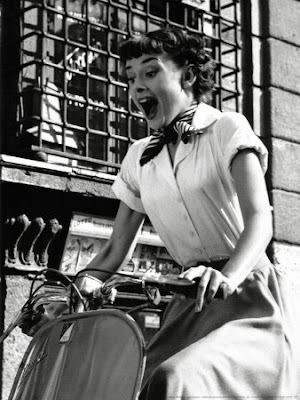
Roman Holiday (1953)

Set in Rome and starring Audrey Hepburn (in her first major movie appearance) there is plenty to delight the eye in this classic romantic comedy standard: from the classic Roman architecture with the vastly ornate interiors to Hepburn's timeless beauty and charm. As with many black and white masterpieces, what marvels the most is the delightful and precise use of shadow and light. Most marvelous in Roman Holiday is how those sections of the screen not in on the film's action are beautifully blacked out in pristine darkness.


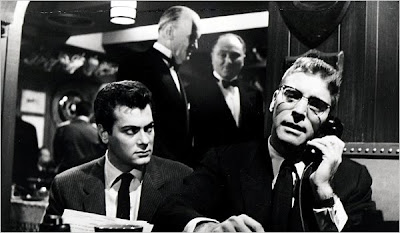
Sweet Smell of Success (1957)

Black and white film and film noir were made for each other. The shadowy darkness of the medium perfectly suits the dark themes and characters of the genre. One of the greatest examples of this is Sweet Smell of Success starring Burt Lancaster and Tony Curtis. With the murky corners and personalities contrasting the brilliant flashing lights of Hollywood matching those characters' lofty and stinging ambitions Sweet Smell of Success proves black and white film is instinctly atmospheric. This is one of those films I can watch purely for its gorgeous lack of color; although, it is also filled with wonderfully swift dialogue and acid whit.


Dr. Stranglove or: How I Learned to Stop Worrying and Love the Bomb (1964)

A major strength of black and white film, both motion and still, is its ability to not only capture but add to the emotion, character and texture to the faces being filmed. Close portraits are very often more fascinating and inspiring when done in black and white and the same is true of a movie close-up. Dr. Strangelove is exemplary in this with its gorgeous black and white filming of monologueing characters--for in those faces are the laughs for this black comedy concerning the annihilation of the world.


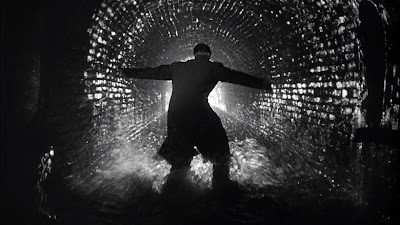
The Third Man (1949)

Once again black and white proves to be the perfect medium for film noir. The art of playing shadow off light is worked to perfection in this crime story set in the dismal and war torn Vienna. In the shadows of this film, suspense is built and mysterious characters are famously revealed. Taking place mostly at night, the slightly angled shots only increase the tension we all feel when in the dark. Not to be missed is the magnificent climax of shadows chasing shadows though the cavernous underworks of Vienna. This is another movie where the filming is so well executed that I can watch it merely for its black and white beauty.


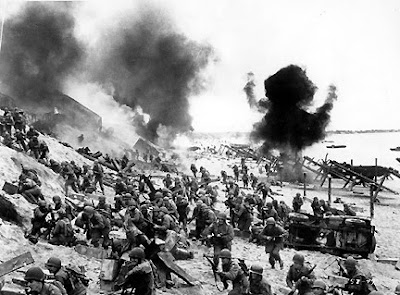
The Longest Day (1962)

This D-Day epic is beautiful in its expanse. Where previously mentioned films take advantage of individual characteristics of black and white film the sprawling and flowing filming exhibited in The Longest Day displays black and white's versatility as a medium. The use of black and white helps make this film feel less entertainment and more a record of one of the most astounding accomplishments in recent history, proving that proper WWII productions are shot in black and white.


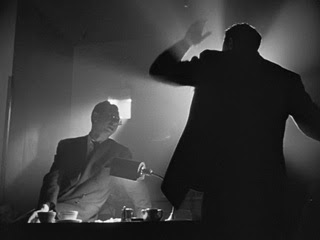
Citizen Kane (1941)

It is difficult to write anything of this movie, so commonly proclaimed "the greatest ever made," that has not already been stated by others, but the reason I have included it on this list is its dazzling use of light and deep focus. Filmed to perfection it makes sense that the greatest movie ever filmed was filmed in black and white.


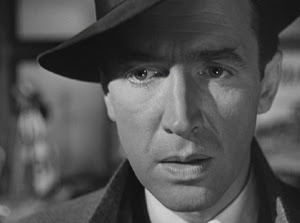
It's a Wonderful Life (1946)

While watching black and white movies I often feel a sense of nostalgia, and It's a Wonderful Life is of the finest examples. I list this film because the use of black and white is so very vital to the characters of the film and its interpretation. Again, shadowy cinematography compliments the dark themes of the film. Jimmy Stewart's incredible performance of desperation is made more effective thanks to the black and white filming.

Wednesday, April 16, 2008

An Untouchable Originality

The creations of the generations past have an untouchable originality. They last through the years remaining and growing in importance, beauty and value. Their originality cannot be touched, disturbed or duplicated. The art or product of another generation captures and expresses the feel and character of that unique generation and time and once that time and generation passes there will be no other way of experiencing it than through those arts. I believe this is a small part of what preserves the originality of the past’s creativity.
We can know how some thing was created, have the right tools and know the right techniques but we could never have their original creativity and creation.
I am a car guy and am reminded of the feel and the way an original, never restored car has a feel, look and drive that a beat, restored or customized car can never duplicate. I do not believe those cars could ever be reproduced even it we had all the original tooling and materials. They become timepieces, remainders of an unreachable culture.
The other day I went to see an art gallery showing some very interesting photographs. They were photographs made by an art student who found some old negatives in a thrift store. They were from the sixties and were of young models posing in outdoor settings such as under trees and by a pool. They were wearing sixties fashion and stood in stiff poses trying to appear casual.
The student took these negatives scanned them onto her computer and then laid them onto each other so each photo appears to be of twins, triplets or quadruplets. The result was very striking. The photos have an innocence and playfulness to them. Looking at them, you feel you are seeing them in their own time but in reality you are seeing them as they never existed.
The gallery takes two rooms. In the first room are the photos made from the ‘60s negatives. In the second room there are two self-portraits made by the artist in an attempt to duplicate the results of the others. She took the photos using similar settings and poses but they fail in recreating the feel and character of the originals. Talking with the artist she spoke of how she thought how since she knew exactly what she wanted and how to get it that she could duplicate it but some how could not. It was the same artist, the same medium and the same process but since the originals have a piece of past their originality could not be touched.
I liked how these photos respected the originality of the negatives. Rather than trying to reproduce them the artist used them to create new art that would highlight them. Looking at the photographs, you would think they were directly from the sixties and they fit the time entirely because the artist did nothing to manipulate them or force them into her own time and culture.
When attempts are made to reproduce or falsely bring the originality of the past to the present it leaves a bad taste. Think of a modern restaurant emulating a ‘50s diner compared to an authentic ‘50s diner. Or think of a bad period film; the fakeness painted decorated feel of it. It is the thing that makes it impossible for an author or director of today to write a noir novel or make a noir film. The genre is characteristically of the past.

Tuesday, March 4, 2008

Star Wars in Childhood-Revised

A revision of an earlier post.
The enjoyment and appreciation of the Star Wars films has continued strong from one generation to the next to today 30 years later when each new generation has its own unique yet similar appreciation of the movies. There are mainly two groups who have loved Star Wars those who were around at their creation and those who have always had Star Wars, since childhood.
I am in the second group and experienced secondhand with everyone else in my generation. We experienced Star Wars in childhood and it gave us something special. For children who play, imagine and pretend Star Wars provided exciting and endless possibilities. As children, the movies were new to us, and they held so much imagination within them: Wookies, Jawas, Ewoks, lightsabers, and spaceships. Our imaginations (I think especially the boys) stemmed off those ideas in play. I always wanted one of those speeders they used in Return of the Jedi.
I also think it served as a good bridge moving from cartoons to movies. They are pure fantasy and imagination like the cartoons children love but they appeared so real. (I think this is why so many value the originals with the puppets and costumes over the new trilogy filled with CGI.) Parents who love Star Wars seem to get a real kick out of sharing it with their children while there are at a young age.
I am often surprised when I meet people who have not seen or dislike Star Wars. (Most whom I have encountered who do not like it have not seen it.) I am beginning to believe that if you wait until adulthood to see the movies you are truly missing out.
Check out this video of a three-year-old who has seen A New Hope just once.