Showing posts with label citizen kane. Show all posts

Wednesday, September 14, 2011

The Burns and Allen Show

"If I say the right thing, please excuse me." Gracie Allen
Being a fan of old things I love classic television, and one of my favorites is The George Burns and Gracie Allen Show starring the greatest husband and wife comedy team. Burns played straight man to Allen’s dizzy dame. They started in vaudeville, became hits; moved to radio, became hits there; and then moved to television to become hits all over again.

George playing straight to Grace's "illogical logic."

The Burns and Allen Show has lots of appeal for modern television audiences. It was quite advanced for its day and it remains freshly unique from modern television trends. George’s character had the power to walk through the fourth wall to directly converse with and comment to the “live” audience. For fans of The Office this will feel similar to Jim Halpert’s sly smirks and stares, but it works out very differently.

In the Burns and Allen Show it allows George to step out of scene to monologue (with impeccable timing famously punctuated by his cigar) and occasionally manipulate plot towards a more entertaining ends.

The show’s unique stage set aids George’s comical flaunting of the fourth wall. It consists of two homes with partially-built walls (including front doors) facing the audience—unlike other shows which have no fourth wall and the ends of the joining walls are hidden to disguise the wall’s absence. George could walk through the walls to eavesdrop on Gracie’s scheming, keeping him ahead of his co-characters’ actions (although not always).

Gracie brings home a trimmed Christmas tree

But the most drawing feature of the Burns and Allen Show is Gracie’s lovably confused character with her loopy conversations and silly schemes. George Burns once described her character as “the American poster child of confusion and misunderstanding.” The real genius of the character is that, for Gracie, it is never really Gracie who is confused but those around her, and it is up to her to patiently set them straight. To do that she uses her unique brand of “illogical logic”--the things she says always have the strictest appearance of being logical.
"I was so surprised at being born that I didn't speak for a year and a half." Gracie Allen
Gracie’s character is very charming, loving and sweet. Her mix-ups frequently involve her earnest attempts to help her friends, and nearly everyone is a friend. Unlike Lucy Ricardo in I Love Lucy, Gracie is rarely driven by selfish and self-serving motives.

Those closest to her learn to wade through the misunderstandings and George encourages it (after all, this is how he makes his living as a comedian). Strangers become confused beyond natural sense often leaving their hats while fleeing Gracie’s presence. She then thoughtfully stores the forgotten hats after labeling them with names and personal descriptions (one of my favorite running gags of the show). George keeps a bottle of aspirin on the coffee table, for guests. When someone attempts to ask George why he stays with such a … he cuts them short, answering: “I happen to love her, that’s why.”

The show’s a blast of old-time charm, spiraling dialogue, innovative formatting, clever narration, and ambiguous boundaries that could only be made in the earliest days of television. In those early days television was new and the rules were not yet made.

Much like in early film and Orson Welles’ Citizen Kane, when rules and trends are unmade or unknown it allows creative talent to use fresh ideas and styles that are independent from the influence of previous trends and practices.  The result is an exciting and lasting originality.

A few samples:

Gracie's Checking Account- This is a very funny episode early in the series. It runs 30 minutes.
Lamb Chops- This is an eight minute film of one of their vaudeville routines. 


*Orson Welles had complete creative control and a very limited understanding of film-making when he made Citizen Kane, his first film. He had a strong theater and radio background.

Friday, March 5, 2010

Gorgeous Greys: beautiful black and white movies

Being a fan of old things I greatly enjoy black and white movies. Previously I briefly listed a few of my favorite black and white films but now I want to focus more directly on black and white film as a visual medium. This is a list of most beautiful black and white movies--movies that are dazzling and magnificent, making the need or desire for color an absurd idea. These movies are picked solely for their effective use of the black and white film medium. All other elements are only pertinent as they relate to the use of black and white.


Roman Holiday (1953)

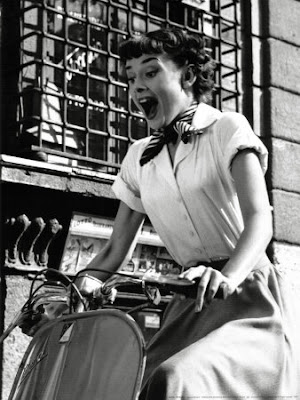
Set in Rome and starring Audrey Hepburn (in her first major movie appearance) there is plenty to delight the eye in this classic romantic comedy standard: from the classic Roman architecture with the vastly ornate interiors to Hepburn's timeless beauty and charm. As with many black and white masterpieces, what marvels the most is the delightful and precise use of shadow and light. Most marvelous in Roman Holiday is how those sections of the screen not in on the film's action are beautifully blacked out in pristine darkness.


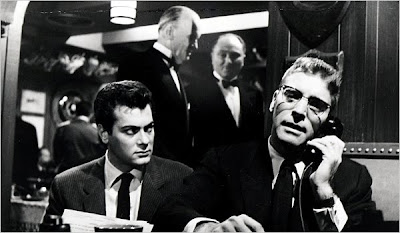
Sweet Smell of Success (1957)

Black and white film and film noir were made for each other. The shadowy darkness of the medium perfectly suits the dark themes and characters of the genre. One of the greatest examples of this is Sweet Smell of Success starring Burt Lancaster and Tony Curtis. With the murky corners and personalities contrasting the brilliant flashing lights of Hollywood matching those characters' lofty and stinging ambitions Sweet Smell of Success proves black and white film is instinctly atmospheric. This is one of those films I can watch purely for its gorgeous lack of color; although, it is also filled with wonderfully swift dialogue and acid whit.


Dr. Stranglove or: How I Learned to Stop Worrying and Love the Bomb (1964)

A major strength of black and white film, both motion and still, is its ability to not only capture but add to the emotion, character and texture to the faces being filmed. Close portraits are very often more fascinating and inspiring when done in black and white and the same is true of a movie close-up. Dr. Strangelove is exemplary in this with its gorgeous black and white filming of monologueing characters--for in those faces are the laughs for this black comedy concerning the annihilation of the world.


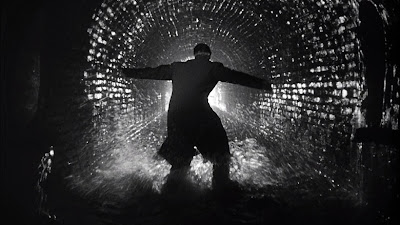
The Third Man (1949)

Once again black and white proves to be the perfect medium for film noir. The art of playing shadow off light is worked to perfection in this crime story set in the dismal and war torn Vienna. In the shadows of this film, suspense is built and mysterious characters are famously revealed. Taking place mostly at night, the slightly angled shots only increase the tension we all feel when in the dark. Not to be missed is the magnificent climax of shadows chasing shadows though the cavernous underworks of Vienna. This is another movie where the filming is so well executed that I can watch it merely for its black and white beauty.


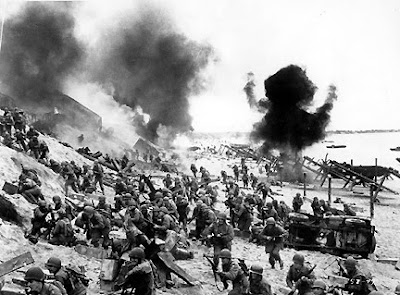
The Longest Day (1962)

This D-Day epic is beautiful in its expanse. Where previously mentioned films take advantage of individual characteristics of black and white film the sprawling and flowing filming exhibited in The Longest Day displays black and white's versatility as a medium. The use of black and white helps make this film feel less entertainment and more a record of one of the most astounding accomplishments in recent history, proving that proper WWII productions are shot in black and white.


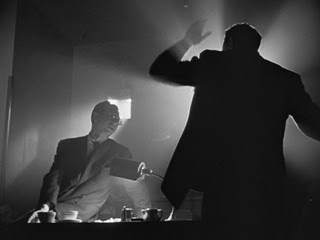
Citizen Kane (1941)

It is difficult to write anything of this movie, so commonly proclaimed "the greatest ever made," that has not already been stated by others, but the reason I have included it on this list is its dazzling use of light and deep focus. Filmed to perfection it makes sense that the greatest movie ever filmed was filmed in black and white.


It's a Wonderful Life (1946)

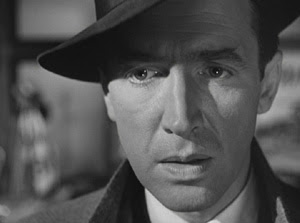
While watching black and white movies I often feel a sense of nostalgia, and It's a Wonderful Life is of the finest examples. I list this film because the use of black and white is so very vital to the characters of the film and its interpretation. Again, shadowy cinematography compliments the dark themes of the film. Jimmy Stewart's incredible performance of desperation is made more effective thanks to the black and white filming.

Tuesday, September 18, 2007

Citizen Kane

According to the American Film Institute and their list of 100 greatest films the greatest movie ever made was made over 60 years ago. The movies being made today do not even seem worthy of comparison. You would expect movies to grow progressively better as film makers grow more experienced and new techniques are developed. I feel that part of the problem is in the emphasis film makers are placing in technology and special effects.

In the golden age of film the focus of film makers was not on special effects but on the script, photography, emotion and acting. These are the points that make a great film. Casablanca used a cardboard plane and midgets as the background for the final and most important scene and is made better then anything with special effects. The original AFI list says only Citizen Kane betters it. (The revised list adds The Godfather.)


In the golden age scripts were written by real writers. The Humphrey Bogart and Lauren Bacall film To Have and Have Not was based on a novel by Ernest Hemingway and had a screenplay written by William Faulkner.

It was common practice (especially in film noir) to use adaptations from literature to create scripts. The scripts read like literature because they are literature. (Sunset Boulevard is also a good example of this.)
Scripts today are witty banter at best. From time to time there comes a film that can sit alongside those old beautifully written films. When those films do come they stand out and do not seem to fit among other modern films. The two most recent films in the AFI top ten are Raging Bull (1980) and Schindler’s List (1993) (Raging Bull was just added). Both these movies are so far removed from other modern movies that they are even filmed in black and white.