Showing posts with label classic cars. Show all posts

Wednesday, November 9, 2011

A Few More Things Automobiles Have Lost Over Time Part II

TWO-TONE EXTERIORS
There was a time when the beauty of a car was one of its most prized attributes. Cars were sleek and stylish.  The early twentieth century was a highpoint for the automobile, and during that time auto makers made sure to compliment their innovative, elegant designs in stunning multi-colored beauty.  The 1950s, in particular, were the time of two- and sometimes tri-tone color schemes as the sleek and shapely bodylines of the designs provided fine boundaries for colors to meet and mash.
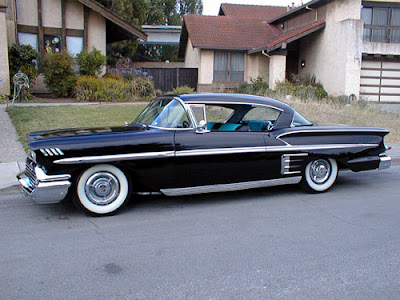
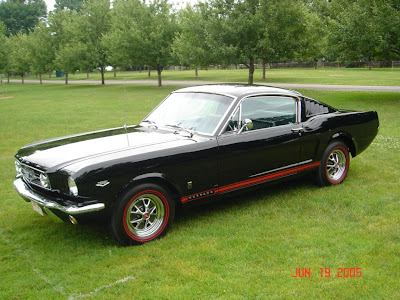
            The colors were vibrant and varied, and they were thrown together to create a great assortment of diverse color schemes. Bright colors were matched with black for dramatic flash.  Matching shades of a single hue made for class and elegance.  Most any color could be matched with white. One of the most striking combinations was the popular black-and-red color scheme that screams 1950s Americana. Another one of my favorites of the chrome-and-fins era was the gorgeous charcoal-and-coral scheme offered on 1955 Chevy’s.
            Cars don’t come from the factory with rich colors like that anymore—they haven’t the shape for it.  The majority of today’s cars are monochromatic and formless blobs, melting Jellybeans idly oozing their way down the road.  Older cars are finely sculpted pieces of kinetic art.  They are low, long and wide not for improved handling but for a graceful and gliding appearance as they move down the road.  And like a fine painting these pieces of rolling art exhibit a deliberate and stimulating use of color.

WRAPAROUND WINDSHIELDS
Wraparound or panoramic windows are another styling cue unique to the 1950s.  These windshields turned the corners of the cars with elegantly curved glass which was not only stylish but pushed the pillars to less visually restrictive positions. When paired with the thin front pillars of the day and the hardtops that had no center pillar, the wraparound windshield helped provide unobstructed visibility and a spacious open-air feel.  I especially like the inwardly angled shape achieved when a wraparound windshield was paired with a wraparound rear window like on the 1958 Chevy Impala. Another one of my favorite designs of the 1960s is the elegant sweptback styling Pontiac achieved by pairing a wraparound windshield with a beautifully curved ultra-thin rear pillar.

THIN AND DECORATIVE STEERING WHEELS
I don’t believe there has been a truly beautiful steering wheel since the standardization of the airbag. Airbags ruined the steering wheel with their rubbery bulkiness. Before airbags steering wheels had far greater potential for alluring design. They were thin yet over-sized.  They could be flashy chrome and color or they could be wood and brass. The use of a chrome horn-ring made for an elegant and popular circle-within-a-circle affect. There were also cars like 1960s Pontiacs and Chryslers that used translucent steering wheels that placed the Sun’s radiance in the hands of the driver. 
1918 Oldsmobile
1934 Packard
1934 Cadillac V-16 with banjo style spokes.
1950 Oldsmobile 88 with gull wing (slightly bent) top spokes.
Notice the wonderful combination of polished chrome and brushed steel.
1947 Buick Super 8
1966 Oldsmobile Toronado
1956 Mercury Montclair
Porsche with a lovely use of chrome and wood.

Thursday, May 26, 2011

Old cars & family history

Cars are significant family possessions probably second only to the family home in importance. They are often bought when the family is young and the cars grow old and familiar as the family matures. (The back seat of the family car becomes a safe and comfortable place—a favorite for drowsy children.) Thanks to the passing of time and daily use, the cars and their families also grow closer. Later on the family’s many memories are tied to the cars they lived with.

In my family, the family cars and family history are closely tied and interwoven. In fact the family cars provide the timeline and structure for the history. Family stories are often told: “We drove there in the Bonneville so it must have been the mid-60s” or “the Buick was still new so it was probably 91 or 92.” It also helps that cars are often bought at family milestones such as marriages, births, moves and new drivers.

As part of a family, cars get to take part in daily errands, family events, and road trips. They get into family photos—they get lavished with attention and they get neglected. Years later when they are old and probably gone, replaced by another, they are an important part of the family memories. We look back on them as part of what made ‘the good old days.’

Something interesting about old cars that are kept in the family is that they are a lasting and tangible piece of times before. It’s a piece of your father’s life before you were born, maybe before he was married. Or it’s the car you grandfather bought and drove while you mother was a child. It’s a remainder of the lives your family lived and you didn’t. The car was there though and you’re sitting in it—you’ve driven it too.
 
These are my mom’s younger siblings standing before the family’s Pontiac bought new in 1956. (Oldest to youngest: my uncle Sal, Aunt Irene and Uncle Robert.) This car brought newborns home from the hospital, later taught those kids to drive and then took part in their youthful antics. It also pulled trees and off-roaded.

My uncle Sal would, 35 years later, restore it to like-new only to lose it in a divorce. The second photograph shows how it looked in the 1980s after being painted blue.


This 1964 Chevy Impala was my mom’s first car besides the family hand-me-down ‘56 Pontiac. She says she loved it. It was later stolen and taken for a joyride and police chase. My mom eventually had the car returned to her but not before it was driven over a fire hydrant, wrecked, then abandoned by the thieves.

Back in the garage is a 1960 Pontiac Bonneville which my uncles tell me was quite fast; I believe them. Pontiac was hitting the drag strips and race tracks hard and heavy in the early 1960s in order to gain some brand recognition. It was a great time to be Pontiac loyal.

Saturday, October 27, 2007

A Few Things Automobiles Have Lost Over the Course of Time

HARDTOPS- Some of today may not even fully understand what a hardtop is. It is a car (mostly two-doors) without posts. When you roll the windows down everything is wide open. Hardtops were originally designed as a more practical and reliable alternative to the convertible. They were great. They were stylish, provided great visibility and made for roomy, spacious cabins. When wondering why hardtops are no longer made my first thought was that safety standards may not allow it but that can’t be so because they still make convertibles.

SUICIDE DOORS- Despite the dangerous sounding name, they really weren’t especially dangerous (they did have their cautions mainly when entering and exiting in traffic but that’s true of any door). Suicide doors have their hinges towards the rear of the car opening towards the front of the car. What makes them so great is the ease of entering and exiting. think of entering and exiting a conventional door. When seated in the car you are facing forward but your door opens backward. To exit you must open the door turn completely around and walk out in the direction opposite of which you started. They were abandoned by automakers when they began repelling the safety conscious in the 1960s but with child safety locks this may be less of a problem.

COLORED INTERIORS- I am tired of looking into new cars, many that are beautiful and well built to see that the automaker has failed to provide an interior worthy of and complementing to the rest of the car. It used to be, interiors were made to compliment the exterior. This included the option of many more colors than today’s neutrals of grey, tan and black. Black cars came with white, red and black interiors. Blue cars came with the option of black, white and several different patterns and shades of blue. Red cars came with white, peaches, and reds. Cars with dark exteriors were gorgeous with white interiors. Many cars had two-tone dashes and steering wheels; the top matched the exterior for looking in from the outside and the bottom matched the interior for those inside the car. Red interiors are classy and classic. A few years ago Pontiac offered a red leather interior in its GTO which was beautiful and unique in a world of tans and grays. Unfortunately, the exterior had little curb appeal so it was short lived. This showed the sad state of consumers today where outer appearances are everything.


TIRES THAT MATTERED- In the Disney movie Cars, one of my favorite cars is the old Mercury police car. It’s so classic with its big sleek look in that black and white pattern (Oh, the beauty of black and white). One of my favorite things about that car is the white walls tires that came complete with curb-feelers meant to protect them. Once again the designers and makers of cars in the past proved more capable in designing a completely marvelous car without a single detail over looked. That’s why white walls, redlines, raised white lettering and white lines mattered. They were more than tires they showed the auto industry and the drivers cared.