Wednesday, August 10, 2011

Colt 1911 100th Anniversary

Colt M1911 as made today 100 years later

This year marks the 100th anniversary of the Colt M1911 semi-automatic pistol which famously and reliably served American armed forces for so many decades. Not being a collector or shooter myself, I am familiar with the 1911 from war films, documentaries and the history books. It served and defended America and its soldiers in World War I, World War II, the Korean War, the Vietnam War, the Gulf War and the War in Iraq.

M1911 in combat during WWII

Intentionally designed, by John Moses Browning, as a military side arm it was first adopted by the United States Army as the standard issue March 29, 1911. The .45 caliber pistol was soon the standard issue for all branches of the U.S. military, and it quickly gained a reputation as the greatest combat pistol ever made.

Most amazing is not the anniversary of its design but that 2011 also marks 100 years of continued use, and the pistol is still regarded as one of the finest semi-auto fire arms available.

It has not been the standard issue for the U.S. military since 1985 when it was replaced partially due to NATO’s desire to share standardized ammunition between nations. This meant either the U.S. changes from its .45 cal or the majority of the other NATO nations change from their 9mm. January 1985 the United States moved to the Beretta 9mm still used today; although, the 1911 is still used by Special Forces groups, Marines and various police departments. Many feel the United States moved to an inferior weapon and cartridge when it withdrew the M1911 as standard military sidearm.

I cannot help but wonder in amazement: What would it be like to be the creator of a revolutionary and lasting design like the 1911? I am respectfully in awe of John M. Browning’s genius. Browning’s creation remains as not only a viable and reliable design but one that is still highly desirable and elite in its field, 100 years later.  Even more amazing is that this is not Brownings only such acheivement.  His Browning M2 .50 cal machine gun which has seen vast military service on tripods, on armored vehicles, on warships, in aircraft and as a sniper rifle is also approaching 100 years of service.

John Moses Browning with M1917 machine gun

So many other technologies have come and gone since then; so many other designs have been improved upon and advanced over and over again in the last 100 years. Not Browning’s Colt .45. It has changed so very little and has rarely been improved upon. In 1911 America was still a horse culture.  Aviation was still in its infancy, and the planes were made of wood and cloth. The majority of American homes still lacked running water. It would be several more years before Charlie Chaplin would begin to make films—10 to 15 minute silents. America only had 46 states.

Thursday, June 23, 2011

Silver currency


Walking Liberty Half Dollar designed by Adolph A. Weinman
Remember when our money used to mean something; when it was real because it was silver. I often wish I lived in the time of silver currency. It’s always been a dream of mine to pay for something with a stack of silver dollars. Paying with a stack of copper-sandwich quarters just does not have the same charm as the heavy-clinking, bright-white shining cartwheels of times past.

Silver in any coinage is brilliant and beautiful, but I feel the dollar and half dollar (the two coinages we no longer used) were the finest examples. The faces are large enough to allow the silver coin bring real beauty into the everyday lives of American consumers, as it was a fine canvas for artists.


My favorite may be the Peace Dollar designed by Anthony de Francisci, and minted 1921-28, 1934-35. It was originally an expression of the joy following the end of WWI and the hope for continued peace. Unfortunately the peace following WWI was not lasting and mintage ceased. On the face is an elegant portrait of a radiant, crowned Lady Liberty with a breeze running through her hair (possibly the finest portrait put on a coin). The reverse shows the American Eagle holding an olive branch and guarding the rock of Peace.  The text is done in the art-deco style of the times.

The coin designs were more inspired in the age of silver. The silver held Liberty personified, glorious eagles, symbolism and national hopes and values. During the State Quarter program they removed the standing eagle to replace it with ten years of state mottoes, maps and commercial objects.

Another aspect of silver currency that fascinates me is that should all that silver become too heavy for daily carrying you were given silver certificates. Unlike today, these bills didn’t merely represent a monetary value, they held the place of that value in silver. Turn one into a bank and it was their responsibility to give that value in silver. The old silver certificates were also very beautiful and inspired, and sometimes controversial.


1896 $2 silver certificate
1896 $1 silver certificate
1896 $5 silver certificate
1899 $5 silver certificate
1923 $5: "five silver dollars payable to the bearer on demand"

Wednesday, June 22, 2011

Westerns

The Western is a movie genre that had its golden age decades ago, and today the genre holds an “old movie” image. Westerns are still made today (and we have some fine, recent Westerns), but they are made only occasionally. Generally, if you are watching a Western it is the product of an older generation—made to suit the styles and interests of that time.

Still from Stagecoach (1939)

The classic Western, once a prolific genre for film and television, has much to offer. Most of all, they’re exciting. Westerns are full of horse chases, gun fights, heroes, villains and thrilling stunts. They are filled with beautifully-filmed scenic wildernesses such as Monument Valley in John Ford’s films Stagecoach and The Searchers (a rarity: a truly beautiful color film).

Scenic still from The Searchers (1956) starring John Wayne
 Historically, the Western genre is also filled with exciting, epic musical scores and theme songs. High Noon; The Magnificent Seven (my favorite shoot-em up); Butch Cassidy and the Sundance Kid; and The Good, The Bad and The Ugly (my favorite spaghetti western) are all fine examples of excellent and unforgettable movie scores.


John Ford's The Searchers (1956): Every frame a masterpiece

But most importantly, Westerns are uniquely and characteristically American. They are set in the American West, they depict moments in American history and they deal with American themes and concerns. Even The Good, the Bad and the Ugly, a spaghetti Western made in Italy by Italians, is set in the American West during the Civil War.

I often prefer the classic Westerns because they are more likely instilled with the American brand of optimism. Dark themes, desperate times and violent acts all occur in the films, but the optimistic drive to create prosperity and security out of cruel lawlessness and order out of dangerous frontier is always present in the Old West.

In classic Westerns the liberty and security of town populations are often threatened and oppressed by cruelty and lawlessness as the film centers on its protagonist finding the courage and ability to defend against such enemies. And the good guy always wins. The modern movie watcher might call this cliché and unrealistic but during the golden age you hoped for, fought for and expected the good and righteous to win out. It’s a refreshing difference from today’s overly pessimistic frame of mind.


High Noon (1952) starring Gary Cooper and Grace Kelly occurs in real time, and the ever-present clock is used as a highly effective device to build suspense for the shootout 
 I would like to also mention The Man Who Shot Liberty Valance as yet another fine classic western.  This noirish Western stars John Wayne and Jimmy Stewart as two conflicting protagonists and Lee Marvin as a most vicious villian.

Thursday, May 26, 2011

Old cars & family history

Cars are significant family possessions probably second only to the family home in importance. They are often bought when the family is young and the cars grow old and familiar as the family matures. (The back seat of the family car becomes a safe and comfortable place—a favorite for drowsy children.) Thanks to the passing of time and daily use, the cars and their families also grow closer. Later on the family’s many memories are tied to the cars they lived with.

In my family, the family cars and family history are closely tied and interwoven. In fact the family cars provide the timeline and structure for the history. Family stories are often told: “We drove there in the Bonneville so it must have been the mid-60s” or “the Buick was still new so it was probably 91 or 92.” It also helps that cars are often bought at family milestones such as marriages, births, moves and new drivers.

As part of a family, cars get to take part in daily errands, family events, and road trips. They get into family photos—they get lavished with attention and they get neglected. Years later when they are old and probably gone, replaced by another, they are an important part of the family memories. We look back on them as part of what made ‘the good old days.’

Something interesting about old cars that are kept in the family is that they are a lasting and tangible piece of times before. It’s a piece of your father’s life before you were born, maybe before he was married. Or it’s the car you grandfather bought and drove while you mother was a child. It’s a remainder of the lives your family lived and you didn’t. The car was there though and you’re sitting in it—you’ve driven it too.
 
These are my mom’s younger siblings standing before the family’s Pontiac bought new in 1956. (Oldest to youngest: my uncle Sal, Aunt Irene and Uncle Robert.) This car brought newborns home from the hospital, later taught those kids to drive and then took part in their youthful antics. It also pulled trees and off-roaded.

My uncle Sal would, 35 years later, restore it to like-new only to lose it in a divorce. The second photograph shows how it looked in the 1980s after being painted blue.


This 1964 Chevy Impala was my mom’s first car besides the family hand-me-down ‘56 Pontiac. She says she loved it. It was later stolen and taken for a joyride and police chase. My mom eventually had the car returned to her but not before it was driven over a fire hydrant, wrecked, then abandoned by the thieves.

Back in the garage is a 1960 Pontiac Bonneville which my uncles tell me was quite fast; I believe them. Pontiac was hitting the drag strips and race tracks hard and heavy in the early 1960s in order to gain some brand recognition. It was a great time to be Pontiac loyal.

Friday, March 5, 2010

Gorgeous Greys: beautiful black and white movies

Being a fan of old things I greatly enjoy black and white movies. Previously I briefly listed a few of my favorite black and white films but now I want to focus more directly on black and white film as a visual medium. This is a list of most beautiful black and white movies--movies that are dazzling and magnificent, making the need or desire for color an absurd idea. These movies are picked solely for their effective use of the black and white film medium. All other elements are only pertinent as they relate to the use of black and white.


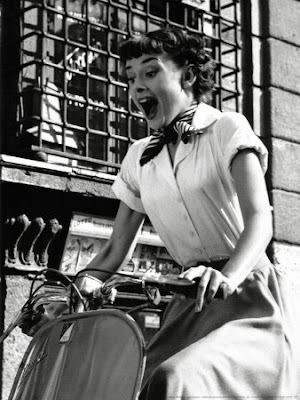
Roman Holiday (1953)

Set in Rome and starring Audrey Hepburn (in her first major movie appearance) there is plenty to delight the eye in this classic romantic comedy standard: from the classic Roman architecture with the vastly ornate interiors to Hepburn's timeless beauty and charm. As with many black and white masterpieces, what marvels the most is the delightful and precise use of shadow and light. Most marvelous in Roman Holiday is how those sections of the screen not in on the film's action are beautifully blacked out in pristine darkness.


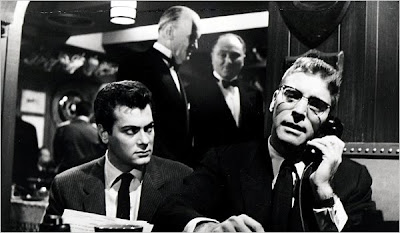
Sweet Smell of Success (1957)

Black and white film and film noir were made for each other. The shadowy darkness of the medium perfectly suits the dark themes and characters of the genre. One of the greatest examples of this is Sweet Smell of Success starring Burt Lancaster and Tony Curtis. With the murky corners and personalities contrasting the brilliant flashing lights of Hollywood matching those characters' lofty and stinging ambitions Sweet Smell of Success proves black and white film is instinctly atmospheric. This is one of those films I can watch purely for its gorgeous lack of color; although, it is also filled with wonderfully swift dialogue and acid whit.


Dr. Stranglove or: How I Learned to Stop Worrying and Love the Bomb (1964)

A major strength of black and white film, both motion and still, is its ability to not only capture but add to the emotion, character and texture to the faces being filmed. Close portraits are very often more fascinating and inspiring when done in black and white and the same is true of a movie close-up. Dr. Strangelove is exemplary in this with its gorgeous black and white filming of monologueing characters--for in those faces are the laughs for this black comedy concerning the annihilation of the world.


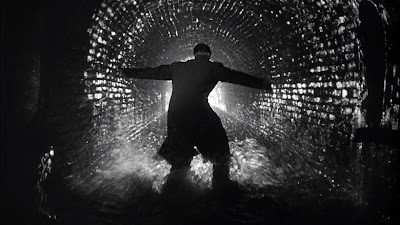
The Third Man (1949)

Once again black and white proves to be the perfect medium for film noir. The art of playing shadow off light is worked to perfection in this crime story set in the dismal and war torn Vienna. In the shadows of this film, suspense is built and mysterious characters are famously revealed. Taking place mostly at night, the slightly angled shots only increase the tension we all feel when in the dark. Not to be missed is the magnificent climax of shadows chasing shadows though the cavernous underworks of Vienna. This is another movie where the filming is so well executed that I can watch it merely for its black and white beauty.


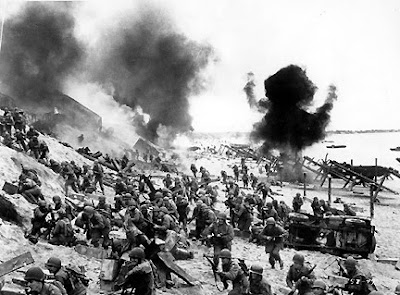
The Longest Day (1962)

This D-Day epic is beautiful in its expanse. Where previously mentioned films take advantage of individual characteristics of black and white film the sprawling and flowing filming exhibited in The Longest Day displays black and white's versatility as a medium. The use of black and white helps make this film feel less entertainment and more a record of one of the most astounding accomplishments in recent history, proving that proper WWII productions are shot in black and white.


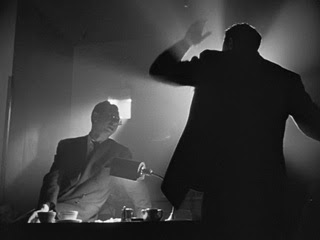
Citizen Kane (1941)

It is difficult to write anything of this movie, so commonly proclaimed "the greatest ever made," that has not already been stated by others, but the reason I have included it on this list is its dazzling use of light and deep focus. Filmed to perfection it makes sense that the greatest movie ever filmed was filmed in black and white.


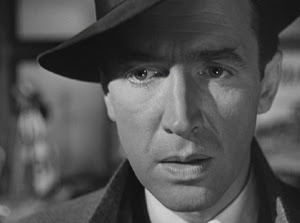
It's a Wonderful Life (1946)

While watching black and white movies I often feel a sense of nostalgia, and It's a Wonderful Life is of the finest examples. I list this film because the use of black and white is so very vital to the characters of the film and its interpretation. Again, shadowy cinematography compliments the dark themes of the film. Jimmy Stewart's incredible performance of desperation is made more effective thanks to the black and white filming.

Wednesday, April 16, 2008

An Untouchable Originality

The creations of the generations past have an untouchable originality. They last through the years remaining and growing in importance, beauty and value. Their originality cannot be touched, disturbed or duplicated. The art or product of another generation captures and expresses the feel and character of that unique generation and time and once that time and generation passes there will be no other way of experiencing it than through those arts. I believe this is a small part of what preserves the originality of the past’s creativity.
We can know how some thing was created, have the right tools and know the right techniques but we could never have their original creativity and creation.
I am a car guy and am reminded of the feel and the way an original, never restored car has a feel, look and drive that a beat, restored or customized car can never duplicate. I do not believe those cars could ever be reproduced even it we had all the original tooling and materials. They become timepieces, remainders of an unreachable culture.
The other day I went to see an art gallery showing some very interesting photographs. They were photographs made by an art student who found some old negatives in a thrift store. They were from the sixties and were of young models posing in outdoor settings such as under trees and by a pool. They were wearing sixties fashion and stood in stiff poses trying to appear casual.
The student took these negatives scanned them onto her computer and then laid them onto each other so each photo appears to be of twins, triplets or quadruplets. The result was very striking. The photos have an innocence and playfulness to them. Looking at them, you feel you are seeing them in their own time but in reality you are seeing them as they never existed.
The gallery takes two rooms. In the first room are the photos made from the ‘60s negatives. In the second room there are two self-portraits made by the artist in an attempt to duplicate the results of the others. She took the photos using similar settings and poses but they fail in recreating the feel and character of the originals. Talking with the artist she spoke of how she thought how since she knew exactly what she wanted and how to get it that she could duplicate it but some how could not. It was the same artist, the same medium and the same process but since the originals have a piece of past their originality could not be touched.
I liked how these photos respected the originality of the negatives. Rather than trying to reproduce them the artist used them to create new art that would highlight them. Looking at the photographs, you would think they were directly from the sixties and they fit the time entirely because the artist did nothing to manipulate them or force them into her own time and culture.
When attempts are made to reproduce or falsely bring the originality of the past to the present it leaves a bad taste. Think of a modern restaurant emulating a ‘50s diner compared to an authentic ‘50s diner. Or think of a bad period film; the fakeness painted decorated feel of it. It is the thing that makes it impossible for an author or director of today to write a noir novel or make a noir film. The genre is characteristically of the past.

Tuesday, March 4, 2008

Star Wars in Childhood-Revised

A revision of an earlier post.
The enjoyment and appreciation of the Star Wars films has continued strong from one generation to the next to today 30 years later when each new generation has its own unique yet similar appreciation of the movies. There are mainly two groups who have loved Star Wars those who were around at their creation and those who have always had Star Wars, since childhood.
I am in the second group and experienced secondhand with everyone else in my generation. We experienced Star Wars in childhood and it gave us something special. For children who play, imagine and pretend Star Wars provided exciting and endless possibilities. As children, the movies were new to us, and they held so much imagination within them: Wookies, Jawas, Ewoks, lightsabers, and spaceships. Our imaginations (I think especially the boys) stemmed off those ideas in play. I always wanted one of those speeders they used in Return of the Jedi.
I also think it served as a good bridge moving from cartoons to movies. They are pure fantasy and imagination like the cartoons children love but they appeared so real. (I think this is why so many value the originals with the puppets and costumes over the new trilogy filled with CGI.) Parents who love Star Wars seem to get a real kick out of sharing it with their children while there are at a young age.
I am often surprised when I meet people who have not seen or dislike Star Wars. (Most whom I have encountered who do not like it have not seen it.) I am beginning to believe that if you wait until adulthood to see the movies you are truly missing out.
Check out this video of a three-year-old who has seen A New Hope just once.

Tuesday, February 26, 2008

"Just One More Thing"

Following the Academy Awards thinking of the winners for the top awards such as Daniel Day-Lewis winning best actor for There Will be Blood and Javier Bardem winning best supporting actor for No Country for Old Men I have a renewed appreciation for the creation of completely captivating characters. Both actors won the awards in a large part thanks to the development of exceptional villains. This is especially true of There Will be Blood which is driven by the development of Day-Lewis’ character.

Exceptional movies are dependent on exceptional and intriguing characters. In my thoughts of great characters, I began looking through the characters of past films looking for the best, my favorites. The one that stood out most is actually from television created by Peter Falk in Columbo(he won five Emmys of 12 nominations).

For those of you who are not familiar with Columbo, you are probably familiar with the classic detective character Peter Falk helped create with Columbo (along with Humphrey Bogart as Phillip Marlow in those classic noir films). You know the sloppy, unkempt but clever detective in the ragged raincoat smoking a cigar.

The Columbo character as written in the Columbo script was originally based on the Porfiry Petrovich character in Fyodor Dostoevsky’s Crime and Punishment. What made Columbo such a great person, a great detective was everything Falk brought into him. Columbo is shaped by the character of Falk.

The costume came from Falk’s own wardrobe. That classic Peugeot Columbo drove and took pride in—Falk picked it. That glass eye and stare is also Falk’s own.

The humor of Columbo is in his humble and hidden cleverness and wile. One of my favorite Columbo quotes comes when a villain remarks, “Listen Columbo, just for a minute how about we stop pretending that I'm brilliant and you're simple!"

Then there are his fears: his fear of water “I can't swim, I don't even like a deep tub,” his fear of heights “My ears pop in an elevator. As a matter of fact I don't even like being this tall,” and his fear of guns.

Falk as Columbo is just plain likable, relatable, persistant and real. He has his coat, his car, his dog and his wife and is comfortable in who he is and in what is familiar and broken in and he becomes a familiar and broken in friend.

Sunday, February 24, 2008

Variety Shows of Early Television

Something that I regret I could not witness was the popularity and prevalence of variety shows in early television. I like the whole style of the of the variety show; bringing masses of celebrities and talents to the shows and the living rooms of the viewers. Even though they were celebrities, while on the variety shows they became like everyone else. They performed but it was often much more lighthearted. They had fun and enjoyed working on these shows. They would gather in sets made up like living rooms often having several of the top talents coming together for an hour of fun and entertainment.

I also like how there was indeed variety in these shows. On the shows comedians, actors and musical performers were blended making an experience unique for that episode. There were so many of these shows hosted by Ed Sullivan, Dean Martin, Johnny Cash, Danny Thomas and many more. Carol Burnett had a great show with excellent regulars like Tim Conway giving laid back and sometimes spontaneous comedy and musical performances.

Dean Martin may have been the king of variety shows with the Martin and Lewis Comedy Hour, the Dean Martin Variety Show and his celebrity roasts.

Another important element of variety television was the introduction to new and arriving talent (especially in the case of the Ed Sullivan Show). Looking at today’s television we really have nothing equal to it. The closest would be the late night sketch comedy shows like Saturday Night Live.

Have a look and see what I mean:

The Beatles on the Ed Sullivan Show
Phil Harris on the Dean Martin Variety Show (you might recognize him as the voice of Baloo on The Jungle Book)
Bob Dylan on the Johnny Cash Show
Louis Armstrong on the Dean Martin Variety Show
Johnathan Winters on the Dean Martin Variety Show

Sunday, December 2, 2007

Simple Suspense

The films being made today are losing the art of suspense. I love old suspense movies and am disappointed they no longer make them the way they used. Today they make horror movies instead. With horror the films scare and surprise with disturbing and shocking images. In suspense the excitement is built up from situation and circumstances.

One of the most suspenseful movies I have ever seen was Wait Until Dark starring Audrey Hepburn. It has been so long since I have seen it but remember literally jumping out of my seat. It was a simple plot: a blind woman locked in her home with two crooks. There was no shocking violence, you saw everything before it happened and it still leaves you tense throughout.

We cannot discuss suspense without mentioning Alfred Hitchcock, the master of suspense. One of my favorite Hitchcock films is Rear Window. Once when watching it—I had started it alone—my roommates and a neighbor came in and the movie briefly became background to the conversations. The skill and suspense of Hitchcock gradually yet quickly took over the attention of everyone in the room. For two in the room it was the first time seeing it.

They were tense and jittery, and those of us who have seen the movie were enjoying watching them. They would nervously inch to the edge of the seat then rock back, rise to a half stand then fall back into the sofa, raise their hands to the tops of their heads then back down all the while stone silent. Even their gasps were silent. How did Hitchcock accomplish all this? With the turn of a glance, the silent click of a phone and the flick of a light switch.

Suspense films used to be simple yet effective. Today they have to be grand and extravagant to be effective.