Saturday, October 27, 2007

A Few Things Automobiles Have Lost Over the Course of Time

HARDTOPS- Some of today may not even fully understand what a hardtop is. It is a car (mostly two-doors) without posts. When you roll the windows down everything is wide open. Hardtops were originally designed as a more practical and reliable alternative to the convertible. They were great. They were stylish, provided great visibility and made for roomy, spacious cabins. When wondering why hardtops are no longer made my first thought was that safety standards may not allow it but that can’t be so because they still make convertibles.
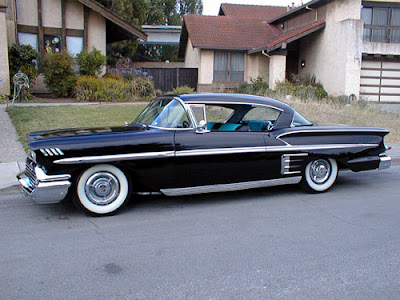
SUICIDE DOORS- Despite the dangerous sounding name, they really weren’t especially dangerous (they did have their cautions mainly when entering and exiting in traffic but that’s true of any door). Suicide doors have their hinges towards the rear of the car opening towards the front of the car. What makes them so great is the ease of entering and exiting. think of entering and exiting a conventional door. When seated in the car you are facing forward but your door opens backward. To exit you must open the door turn completely around and walk out in the direction opposite of which you started. They were abandoned by automakers when they began repelling the safety conscious in the 1960s but with child safety locks this may be less of a problem.

COLORED INTERIORS- I am tired of looking into new cars, many that are beautiful and well built to see that the automaker has failed to provide an interior worthy of and complementing to the rest of the car. It used to be, interiors were made to compliment the exterior. This included the option of many more colors than today’s neutrals of grey, tan and black. Black cars came with white, red and black interiors. Blue cars came with the option of black, white and several different patterns and shades of blue. Red cars came with white, peaches, and reds. Cars with dark exteriors were gorgeous with white interiors. Many cars had two-tone dashes and steering wheels; the top matched the exterior for looking in from the outside and the bottom matched the interior for those inside the car. Red interiors are classy and classic. A few years ago Pontiac offered a red leather interior in its GTO which was beautiful and unique in a world of tans and grays. Unfortunately, the exterior had little curb appeal so it was short lived. This showed the sad state of consumers today where outer appearances are everything.


TIRES THAT MATTERED- In the Disney movie Cars, one of my favorite cars is the old Mercury police car. It’s so classic with its big sleek look in that black and white pattern (Oh, the beauty of black and white). One of my favorite things about that car is the white walls tires that came complete with curb-feelers meant to protect them. Once again the designers and makers of cars in the past proved more capable in designing a completely marvelous car without a single detail over looked. That’s why white walls, redlines, raised white lettering and white lines mattered. They were more than tires they showed the auto industry and the drivers cared.

Tuesday, October 23, 2007

Beauty's Lack of Color


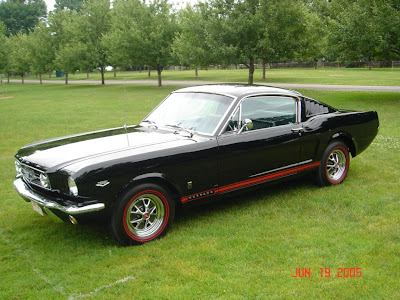
There is a special,elegant kind of beauty reserved for the contrast and simplicity of black and white. Watching black and white movies or looking through black and white photographs puts you in a softer mood then you were in the color of reality. Black and white has several advantages, especially in art. Not only does it create a nostalgic feel but it adds several visual and emotional appeals.

The emotions and tones of black and white films seem much more complete than color. Black and white romance moves are more romantic than color movies. Black and white suspense movies are more suspenseful than color. Film noir is often defined as black and white by requirement. It creates stark shadows, brilliant rays of light with clear paths of travel, and beautifully lit and textured faces.

Another element of black and white film is the greater freedom and responsibility of the viewer to create their own images and interpretations much like the readers of a book must use his imagination. In black and white film the viewer is given an incomplete view and must fill in the blanks of color. In Charlie Chaplin’s Modern Times the female character greats Chaplin’s character outside of jail in what I have always understood to be a country blue and yellow dress. In reality it could be something very different. To another viewer it may be another color. Each viewer is free to make the film his own.

There are some movies in particular that are especially elegant in black and white and could not be any other way. Examples are: Hitchcock’s Psycho, Darryl F. Zanuck’s The Longest Day and the Humphrey Bogart movie The Treasure of Sierra Madre. In a Zagat’s review of the scenic camera work of The Treasure of Sierra Madre someone commented “color, we don’t need no stinking color” making a play of words on the famous line of the movie. The person who colorizes Frank Capra’s It’s a Wonderful Life will be the one who destroys Christmas.

There is also black and white photography that deserves mentioning. One of the most gorgeous things I have ever seen is the Ansel Adams photograph ‘Moonrise over Hernandez, NM.’ What I saw (it was in a museum) was an actual print by Adams; it was not a poster or a reproduction. It was easily the greatest piece of art I have ever witnessed, and quite possibly the most beautiful thing I have ever seen. The contrast was perfect making the photograph seem deep and real. The silvery brilliant white of the moon and distant clouds were perfectly set against the shining black of night. All the posters and prints seen everywhere else do little justice to the real thing.

Tuesday, October 16, 2007

Science fiction at its best

The Twilight Zone may have been science fiction at its best. It grew out of a time of great discovery, wonder, expectations and fears. It came out of the minds of those who saw atomic bombings, Sputnik, new technologies and man on the moon. What they did not see but imagined was equally as great and often depicted in the episodes of The Twilight Zone.

Part of the reason I feel Twilight Zone could be the best of science fiction is because it keeps the human spirit and experience at the forefront of the stories. No matter how far from reality the Twilight Zone may take us we know the elements of the human spirit and experience maintain a consistent relevance to our lives.


There are certain episodes that I often think of as being true to this. ‘The Obsolete Man’ is set in a totalitarian society where the state has outlawed anyone who is not beneficial to the state and proven the nonexistence of God. It tells of a man, Wordsworth, was declared obsolete and sentenced to death. He was a librarian in a state that banned books and a Christian in a state that ‘proved’ God did not exist. As part of his final rights he is give a say in the mode of his execution and a final wish will be heard. He asks that he be killed by an assassin by a mode and at a time known only by him and his assassin, this was granted. For his final wish he asks that his death be televised for all the state to view. This is also granted because it is believed it will glorify and display the ultimate power of the state.

The chancellor comes to Wordsworth’s room to see that everything is set up and to further glorify the state. Once in the room he turns to leave and finds the door looked. It is then that it is revealed that Wordsworth had a bomb hidden in his room set to go off at midnight. It then becomes a game of what is the greater weakness a faith in God or a faith in the state.

The episode explores the fears of man and “the worth, the dignity and rights of man” as Rod Serling so eloquently narrates.


Sunday, October 14, 2007

Everything's Plastic, Everything's Fake

I just got an old record player. This thing is big beautiful and real. It is encased in about a five foot long, three foot tall solidly built, beautifully crafted wood cabinet. It has the classic RCA insignia of the dog listening to the victrola below reading “His master’s voice.” Listening to it and watching the vinyl record turning I was reminded that there was once a time when everything was real. I, on the other hand, have grown up in a plastic world.

I knew only plastic milk cartons rather than glass bottles, plastic car bumpers rather than chrome, Federal Reserve notes rather than silver dollars, vinyl records rather than plastic compact discs and plastic and particleboard furniture rather than solid wood.

I enjoy walking through antique shops and looking through all the creations of the past (often distant past) realizing they are real and lasting. I was always especially interested in and in awe of the majesty of the old wood furniture radios and record players, even the first television sets. They have the charm of the old time personalities they brought into the living rooms of American families. Looking at an old box radio I see a family gathered around it listening to radio shows acted out entirely through voices. Looking at an old cabinet record player I hear Nat King Cole’s ‘When I Fall in Love’ and ‘Unforgettable’ and Glenn Miller’s ‘Midnight Serenade’ and ‘In the Mood.’

I am reminded of a nation that was more united in both its weaknesses and its strengths. Thinking of the fears stirred by Orson Welles’ radio depiction of H.G. Wells’ The War of the Worlds. Also of President Franklin Roosevelt’s war speech ‘A Day of Infamy.’ Looking at these pieces I see and hear a see a world, a time, a people and a nation I never knew.

Saturday, October 6, 2007

Rivalries

A rivalry between sports teams betters with age. The best rivalries are always the old rivalries, those with history. Also rivalries often stem from tradition, especially in schools. Part of the reason I have this topic in mind is this Sunday night’s football game is the Green Bay Packers vs. the Chicago Bears. I have always seen the Packers/Bears game as the epitome of professional football. Especially if played in harsh winter weather. Especially if played at Lambo Field. The football games of old rivals are usually passionate physical games, often in spite of how the rest of the season may have been for the teams involved. As a Miami Dolphins fan I have also enjoyed the Dolphins/Jets games. They are usually intense and close games many times going beyond the fourth quarter.

I also enjoyed the cross town rivalry between my high school and the new school in town. Because this rivalry was with a new school (about 10 years) the rivalry itself does not have much age. The reason the rivalry had the feel and character of an old rivalry was because of the age of my school, Redlands High School. RHS is and old school (over a hundred years) and for just about the entirety of those years it has been the sole high school of the town helping give it its small town feel. People in Redlands mostly stay in Redlands and when you have one high school it creates a community. Up until about a few years ago it seemed that everyone (going back 100 generations) in Redlands graduated from RHS. When the new school was built and began graduating classes the ‘old’ rivalry was started. Each year the game is played at Redlands University’s stadium and is sold out some years days in advance.

For the first seven to eight years of the rivalry RHS dominated mercilessly. I believe it was in the seventh year that the other team first scored against us (a single touchdown for six points). Even then it was scored after the first string had been taken out of the game and replaced by the Junior Varsity. After that year it has been a back and forth battle to obtain the year’s worth of bragging rights the victory brings. I thank God I graduated from a class that had that victory. It is something that will last for as long as I remain in Redlands. And it will grow sweeter with age.

Friday, September 28, 2007

"What is more eloquent than silence?" Charlie Chaplin

What can be? The title of this article is a quotation from the Charlie Chaplin movie Limelight. Ignoring that Limelight is a talking movie I would like to move the topic of silent films. There is beauty and quality in silent films that I fear is overlooked by moviegoers today.

Something that sets silent films apart from modern sound films is the appeal to your emotions that is the center of most silent films. They could not tell their stories verbally so they did what they could to make you feel the story. Chaplin and his City Lights is one of the best examples. Throughout the film you will feel joy, sorrow, desperateness, love, pity and excitement. He makes you feel and that is real.

Silent films are generally known for their physical humor which City Lights also has but Chaplin gives you much more then laughter. The story of the tramp who falls in love with a blind flower girl is moving throughout. It ends with one of the greatest final scenes ever filmed. It is beautifully subtle and not over acted. It is not unheard of for people to be moved to tears by it.

It is probably the greatest example of silent film as well as one of the greatest examples of movie making. It is also a good movie for those who are not familiar with silent film. It is a relatively new movie (1931) and was made several years after sound had become the standard. As a result if feels very modern. It has a synchronized score that Chaplin himself wrote. It has more of that good, old time movie feel rather then the silent short feel. The genius of Chaplin’s direction and him being a perfectionist gave City Lights a flow so smooth it makes the text cards seem unnecessary. Chaplin is a great storyteller and leads you gently through the film. He shows you the story rather then explain it to you through dialogue.

I feel that people may have become inept when it comes to watching and appreciating silent movies. In communication there is what is called “media literacy.” The idea is that we learn how to take in and interpret the media. An example of this would be when the first moving pictures were recorded. The first moving pictures occurred in France. There is a story that at the first public showings of moving pictures the audience was shown film of people walking and traffic in city streets then for a dramatic ending they were shown a clip of a train coming straight towards and then over the camera. The audience freaked, ducked under their chairs and jumped out of the way trying not to be run over. The audience was not yet media literate for moving pictures.

Media literacy also occurs in more subtle ways such as dream sequences and flash backs in film: we have learned to understand the foggy screens. I also believe people can lose some media literacy when they take in changes from what it was. Think of how difficult it can be to read a King James Bible. I feel that this loss of media literacy is true of many people with silent movies. (We, after all, have been watching only sound for almost 80 years.) They are missing out on some great movies. Don’t miss out on these movies yourself. See the movie. You may have to look for it in the rental places. I think Netflix has it. Someone just put it on youtube.

Friday, September 21, 2007

Old Friends

When ever I come across a set of friends that have been together for a lifetime I am amazed and enchanted by the fact of it. I enjoy the stories they have and the way they tell them together. Sometimes you can tell that two people have been friends for their lifetime by observing the way they hold a conversation. You do not have to overhear some piece of information that reveals dates, years or anything like that you just know. When old friends come together it is something special.

They seem to know each other so well and this understanding of each other goes much deeper then with other friendships it seem to go to a place that cannot be described only experienced and witnessed. They are so familiar with each other’s faces that at times they can move each other to laughter or sorrow by exchanging glances. They can read between the lines of each others speech. One can say “remember that time when…” and before he can finish the answer has been given and the conversation is well under way.

Only time passed can make an old friend. Sometimes fast friends can fit this description but it would lack many of the most important qualities of an old friendship. Old friends develop a chemistry together.
An old friend is that friend that seems to be present in the majority of your greatest memories. It does not matter what time or how many years the memories goes back he is there. When you have had this friend long enough it gets to the point where they will always be your old friend even if you eventually lose contact with them. They will always be in those memories they will always have played that part in you life.

The friendships like this seem to be present in the oldest generations most. I am not sure that this is entirely the effect of the need of decades of time together or if this kind of friendship is becoming a real rarity. It may be that modern times have put strains on these friendships. Today people do not stay put the way they used to. The world may be growing too unstable for these kinds of friends. It’s getting harder to trust that the familiarities of today will still exist as we know them in the decades to come. I can only hope that things are noot changing that fast and I see one of my friendships develope into old friends. Old friends, even the phrase itself seems to have a special warmth to it. Endearing. A feeling similiar to that when watching Rick Blaine and Captain Renault walking into the fog at the end of Casablanca.

Tuesday, September 18, 2007

Citizen Kane

According to the American Film Institute and their list of 100 greatest films the greatest movie ever made was made over 60 years ago. The movies being made today do not even seem worthy of comparison. You would expect movies to grow progressively better as film makers grow more experienced and new techniques are developed. I feel that part of the problem is in the emphasis film makers are placing in technology and special effects.

In the golden age of film the focus of film makers was not on special effects but on the script, photography, emotion and acting. These are the points that make a great film. Casablanca used a cardboard plane and midgets as the background for the final and most important scene and is made better then anything with special effects. The original AFI list says only Citizen Kane betters it. (The revised list adds The Godfather.)


In the golden age scripts were written by real writers. The Humphrey Bogart and Lauren Bacall film To Have and Have Not was based on a novel by Ernest Hemingway and had a screenplay written by William Faulkner.

It was common practice (especially in film noir) to use adaptations from literature to create scripts. The scripts read like literature because they are literature. (Sunset Boulevard is also a good example of this.)
Scripts today are witty banter at best. From time to time there comes a film that can sit alongside those old beautifully written films. When those films do come they stand out and do not seem to fit among other modern films. The two most recent films in the AFI top ten are Raging Bull (1980) and Schindler’s List (1993) (Raging Bull was just added). Both these movies are so far removed from other modern movies that they are even filmed in black and white.